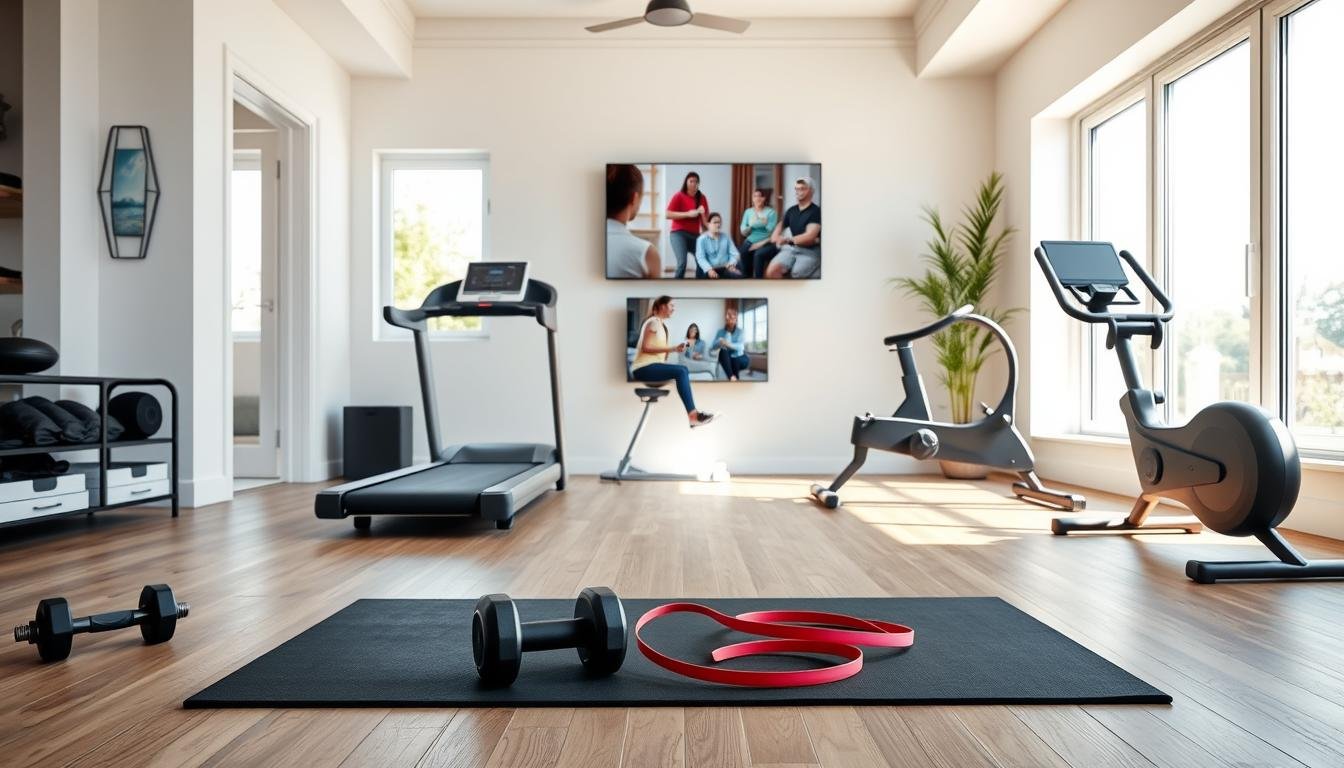
More people are finding the joy of fitness at home. They’re discovering that home workout routines are just as good as gym workouts. Now, you can reach your fitness goals from your own home.
The best home workouts have a wide range of exercises. They fit everyone’s needs, whether you want to lose weight, build muscle, or just stay active. There’s a perfect routine for you.
This article will show you the top home workout routines. It will help you get fit at home easily.
Key Takeaways
- Convenient and effective home workout routines
- Variety of exercises for different fitness levels and goals
- Tips for achieving your fitness goals at home
- Easy-to-follow guidance for getting fit at home
- Effective home workouts for weight loss and muscle building
Why Home Workouts Are the Future of Fitness
The future of fitness is moving towards home workouts, away from crowded gyms. People want convenience and flexibility in their exercise routines. Home workouts offer benefits that gyms can’t match.
Benefits of Exercising at Home
Home workouts have many advantages. They save time and money, and offer privacy and convenience.
Time and Cost Efficiency
Working out at home saves time and money. No need for gym memberships or expensive equipment. As “fitness is not a destination, it’s a journey”, home workouts make it more affordable.
Privacy and Convenience Factors
The gym can be intimidating. Home workouts provide privacy and flexibility. You can work out anytime, without gym hours.
Overcoming Common Home Workout Challenges
Home workouts have benefits but also challenges. Staying motivated and using limited space can be tough.
Creating Motivation Without a Gym Environment
To stay motivated, create a dedicated workout space at home. Set goals and track progress. As fitness expert Jillian Michaels said,
“You gotta have a plan, and you gotta have a goal.”
Maximizing Limited Space
Be creative with limited space. Use multi-functional equipment or bodyweight exercises. Focus on exercises that work many muscles at once.
Best Home Workouts for Different Fitness Levels
Good home workouts match your fitness level. Whether you’re starting out, getting better, or already advanced, a custom workout plan is key to reaching your goals.
Beginner-Friendly Routines
For newbies, start with easy and gentle routines. These home exercise routines build a strong base of strength and endurance.
Basic Bodyweight Circuit
A basic circuit includes push-ups, squats, and lunges. These exercises work many muscles and need no equipment.
- Push-ups: 3 sets of 10 reps
- Squats: 3 sets of 15 reps
- Lunges: 3 sets of 10 reps per leg
Gentle Cardio Options
Try jogging in place, jumping jacks, or cycling for a gentle cardio workout. Aim for 20-30 minutes each time.
- Jogging in place: 5 minutes
- Jumping jacks: 3 sets of 30 seconds
- Cycling: 10 minutes at moderate pace
Intermediate Workout Plans
If you’re more experienced, intermediate workout plans can challenge and improve your fitness.
Strength-Building Combinations
Doing burpees, mountain climbers, and plank holds can boost strength and endurance.
- Burpees: 3 sets of 12 reps
- Mountain climbers: 3 sets of 20 reps
- Plank hold: 3 sets of 60 seconds
HIIT Routines for Fat Loss
High-Intensity Interval Training (HIIT) is short, intense exercise followed by rest. It’s great for losing fat.
“HIIT is a game-changer for fat loss. It’s efficient, effective, and can be adapted to any fitness level.”
Advanced Home Exercise Programs
For the advanced, complex and challenging at-home exercise programs are best. They push your limits.
Challenging Bodyweight Progressions
Try single-leg squats, diamond push-ups, and pull-ups for more strength.
- Single-leg squats: 3 sets of 10 reps per leg
- Diamond push-ups: 3 sets of 12 reps
- Pull-ups: 3 sets of as many reps as possible
Complex Workout Structures
Combine strength training with cardio for a full-body workout. This creates a complex workout structure.
In conclusion, the right workout plan tailored to your fitness level is key for a successful home workout. Choose exercises that match your level to reach your fitness goals.
Essential Equipment for Effective Home Workouts
Home workouts can be very effective with little or no equipment. The most important thing is your commitment to exercising. It’s not about the gear you use.
No-Equipment Options
Bodyweight exercises are a fantastic way to begin your fitness journey without spending money. Push-ups, squats, and lunges are very effective. Yoga and Pilates also work well, using your body weight to build strength and flexibility.
Budget-Friendly Equipment Recommendations
While you don’t need any equipment, some basic gear can make your workouts better and more varied. Here are some affordable options:
Resistance Bands and Dumbbells
Resistance bands are light, easy to carry, and cheap. They’re great for working out different muscle groups. Dumbbells are also key, allowing for exercises like bicep curls and shoulder presses.
Yoga Mats and Stability Balls
A yoga mat is perfect for floor exercises and yoga, offering cushioning and grip. A stability ball is great for core exercises, helping improve balance and strength.
Creating a Dedicated Workout Space
Having a special area for working out at home can really boost your motivation. Clear a corner of a room, get a good mirror, and make sure it’s well-ventilated. This setup will help you stay focused and committed to your fitness goals.
Step-by-Step Home Workout Plans
Effective home workouts need a plan. Whether you’re starting out or are advanced, having a clear plan is key. We’ll look at home workout plans for different fitness levels.
20-Minute Full Body Workout
A 20-minute full-body workout boosts fitness without long gym hours. It targets major muscle groups with a series of exercises.
- Warm-up: 2-3 minutes of light cardio, such as jogging in place or jumping jacks.
- Exercise Circuit: Do 3 sets of 8-12 reps for each exercise, resting 30-60 seconds between sets.
- Cool-down: 2-3 minutes of stretching to prevent soreness and improve flexibility.
Exercise Breakdown and Form Tips
For a 20-minute full-body workout, focus on compound exercises like squats, push-ups, lunges, and planks. Proper form is key to avoid injury and target the right muscles.
- Squats: Keep your back straight and lower your body until your thighs are parallel to the ground.
- Push-ups: Maintain a straight line from head to heels, engaging your core throughout the exercise.
Modifications and Progressions
To make exercises more challenging or easier, consider modifications. For example, knee push-ups are easier than traditional push-ups. Adding weights or increasing reps can make exercises harder.
- Modify exercises based on your fitness level.
- Progress by increasing intensity or volume over time.
30-Day Progressive Program
A 30-day progressive program increases in intensity, building strength and endurance. It’s motivating to track your progress.
Divide your 30-day program into weekly schedules, focusing on different muscle groups or types of exercises each week. Dedicate certain days to upper body, lower body, or core workouts.
- Week 1: Focus on foundational exercises.
- Week 2-4: Gradually increase intensity or introduce new exercises.
Tracking Progress and Results
Monitoring your progress is key to staying motivated. Keep a workout log to track exercises, weights, and how you feel after each workout.
Use this info to adjust your program as needed, ensuring continued progress toward your fitness goals.
Recovery and Rest Day Activities
Recovery is crucial in any workout plan. Include rest days for low-intensity activities like yoga, walking, or relaxing.
These activities help your body recover, reducing injury risk and improving well-being.
Conclusion: Making Home Workouts a Sustainable Habit
Starting a home fitness journey takes dedication and persistence. To keep up with home workouts, it’s key to stay motivated and find a routine that fits you.
Using the right mindset and strategies helps you beat challenges and reach your fitness goals. Begin by setting achievable goals and tracking your progress. Celebrate each small win to keep your motivation high.
Creating a good workout space is also crucial. Get the right gear and set up a dedicated area for working out. As you keep going, a well-thought-out routine will help you stick to home workouts.
Stay committed, and you’ll move towards a healthier, more active life. With the right mindset and approach, home workouts can become a fun and essential part of your day.
FAQ
What are the benefits of home workouts?
Home workouts save you time and money. You can exercise in your own space, whenever you want. It’s private and flexible.
Do I need any equipment to start home workouts?
No, you don’t need equipment to start. Bodyweight exercises are a good beginning. You can add simple gear like resistance bands or dumbbells later.
How do I stay motivated while working out at home?
Stay motivated by setting up a dedicated workout area. Have clear fitness goals and track your progress. Online workout buddies or virtual sessions can also help.
What are some effective home workout routines for beginners?
Start with basic bodyweight circuits and gentle cardio like jogging in place. Yoga or Pilates are great for flexibility and strength.
How can I maximize my limited space for home workouts?
Use bodyweight exercises that need little space, like push-ups and squats. Wall sits and resistance bands are good for strength training in small areas.
What are some tips for creating a 30-day progressive home workout program?
Start by assessing your fitness level. Plan a weekly schedule with increasing intensity. Include rest days and track your progress to adjust the program.
How often should I work out at home to see results?
Work out at home 3-4 times a week. Mix cardio, strength training, and flexibility exercises. Consistency and patience are key to reaching your goals.
What are some activities I can do on rest days?
On rest days, try stretching, yoga, or a walk. Use these days for nutrition planning and recovery techniques like foam rolling.