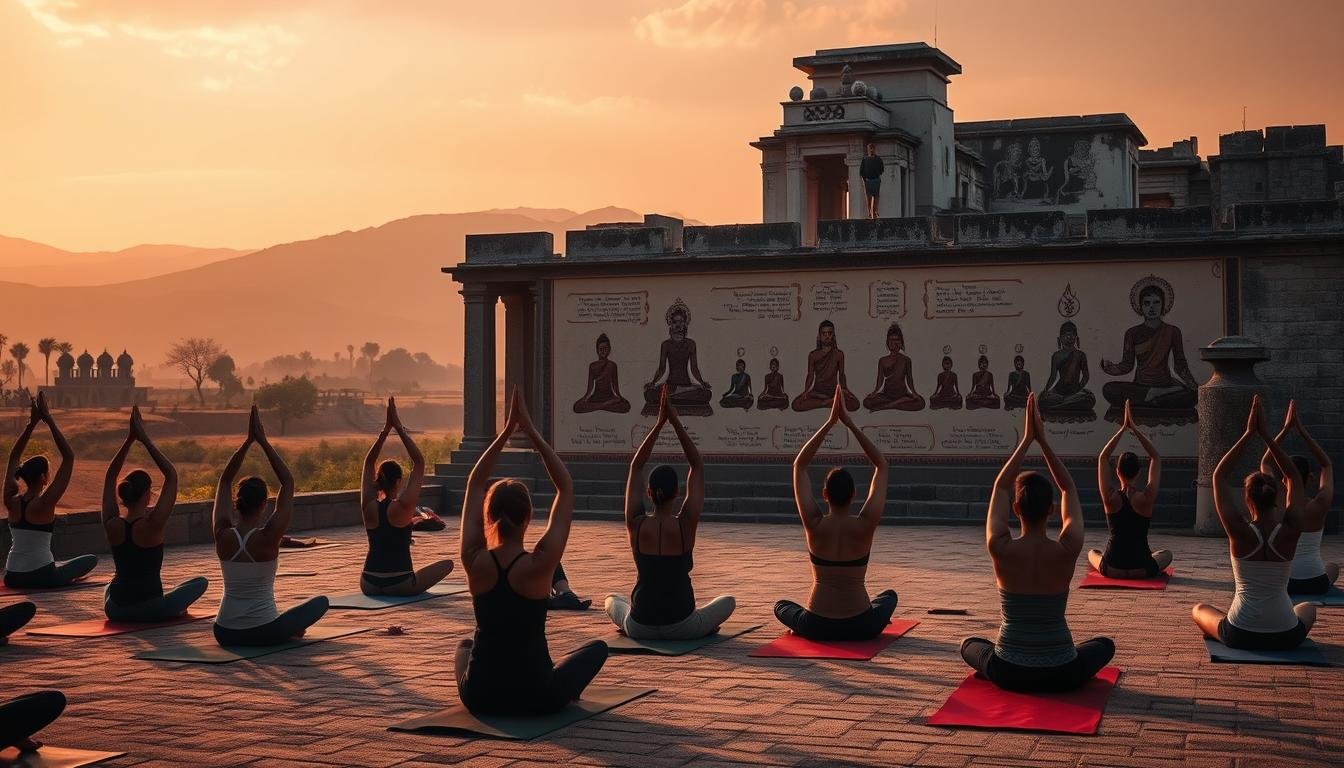
Yoga is now a big part of our lives, helping us feel better physically, mentally, and emotionally. By adding yoga to your daily routine, you can see many benefits. These can make your life better in many ways.
For yoga beginners, starting daily can seem hard. But, it’s easier than you might think. With a daily yoga guide, you can start to see yoga’s benefits. You’ll get more flexible, balanced, and strong. Plus, yoga helps lower stress and anxiety, making you feel calm and happy.
Key Takeaways
- Improve flexibility, balance, and strength with regular yoga practice
- Reduce stress and anxiety with yoga’s calming effects
- Enhance overall well-being with a holistic approach to health
- Simple and accessible for yoga beginners
- Unlock the benefits of yoga with a daily practice
The Ancient Practice of Yoga in Modern Life
Yoga has a long history, starting in ancient India over 5,000 years ago. It has changed a lot over time. Now, it’s a big part of our lives, showing how it has grown and become valued.
Origins and Evolution of Yoga
Yoga first appeared in ancient India, mentioned in the Rig Veda. It was used to find spiritual enlightenment and self-awareness. Over time, different styles like Hatha, Vinyasa, and Ashtanga emerged. These styles made yoga more diverse.
In the 20th century, yoga became popular in the West. This led to it being practiced all over the world. It has adapted to meet the needs of today’s people.
Why Yoga Matters in Today’s Fast-Paced World
In today’s world, stress and anxiety are big problems. Yoga is a great way to fight these issues. It focuses on mindfulness and breath control to help manage stress.
Yoga also makes you physically stronger and more flexible. It improves your mental state, helping you focus better and feel more at peace.
- Reduces stress and anxiety through mindfulness and breathing techniques
- Improves physical health by enhancing flexibility and strength
- Enhances mental clarity and focus, contributing to better productivity
Adding yoga to your daily routine can help you deal with life’s challenges. It leads to a more balanced and happy life.
Physical Benefits of Regular Yoga Practice
Yoga offers many physical benefits. It improves balance, posture, strength, and flexibility. Regular practice can greatly enhance your physical health.
Improved Flexibility and Strength
Yoga is great for improved flexibility. It uses stretches and poses to increase your range of motion. This makes everyday tasks easier.
Yoga also builds strength. It focuses on the core, arms, and legs. This is done through poses and flowing sequences.
Enhanced Balance and Posture
Yoga boosts balance by challenging your body’s equilibrium. Standing and balancing poses help. This reduces the risk of falls and injuries.
Yoga also improves posture. It strengthens muscles that support the spine. This leads to a more aligned and confident stance.
Better Respiratory and Cardiovascular Health
Yoga is good for better respiratory health. It improves lung capacity and efficiency. This is thanks to specific techniques used in yoga.
Yoga also benefits cardiovascular health. It reduces stress, lowers blood pressure, and improves circulation. These are all key for a healthy heart.
Adding yoga to your daily routine can bring these benefits. It leads to a healthier, more balanced lifestyle.
Mental and Emotional Benefits of Yoga
Yoga is more than just physical exercise. It helps you find mental clarity and emotional balance. Regular practice can make you feel less stressed, more focused, and relaxed.
Stress Reduction and Relaxation
Yoga is great at reducing stress and helping you relax. It uses deep breathing and meditation to calm your mind and body. This leads to a more peaceful state.
Adding yoga to your daily routine can help you handle stress and anxiety better. This improves your overall well-being.
Improved Focus and Mental Clarity
Yoga also boosts your focus and mental clarity. It trains your mind to stay present and concentrate. This can make you perform better at work and in daily life.
Emotional Balance and Well-being
Yoga helps you find emotional balance too. It makes you more aware of your feelings and thoughts. This awareness helps you manage your emotions better, leading to a more fulfilling life.
| Mental/Emotional Benefit | Description | Yoga Practice |
|---|---|---|
| Stress Reduction | Reduces anxiety and stress | Deep Breathing, Meditation |
| Improved Focus | Enhances concentration and mental clarity | Asanas, Pranayama |
| Emotional Balance | Promotes emotional awareness and regulation | Meditation, Yoga Nidra |
Your Complete Daily Yoga Guide: Getting Started
Starting a daily yoga practice can change your life. But, it’s important to start right. You need a good foundation for a consistent and fun practice.
Assessing Your Fitness Level and Goals
Before starting your daily yoga, think about your fitness and goals. Do you want to get more flexible, feel less stressed, or improve your overall health? Knowing what you want will help you make your practice better. Think about these things:
- Your current level of flexibility and strength
- Any physical limitations or health concerns
- Your availability for practice each day
Setting Realistic Practice Schedules
It’s key to set a practice schedule that works for you. Start with a short time, like 10-15 minutes, and grow as you get more into it. Think about when you can practice best. Maybe it’s in the morning to wake up or at night to relax.
Creating a Dedicated Space for Practice
Having a special place for yoga makes a big difference. Find a quiet, clean spot where you can focus. Here’s what to think about for a great space:
- Minimal decor to promote a sense of calm
- A non-slip surface or a high-quality yoga mat
- Good ventilation and comfortable temperature
By thinking about your fitness, setting a good schedule, and having a special space, you’re ready to start a rewarding daily yoga routine.
Essential Equipment and Props for Daily Practice
To get the most out of your daily yoga practice, consider incorporating essential equipment and props. The right tools can enhance your practice, making it safer and more effective.
Choosing the Right Yoga Mat
A good yoga mat is the foundation of your practice. When choosing a yoga mat, consider factors such as material, thickness, and grip. A mat that provides adequate cushioning and traction can prevent injuries and improve your overall practice.
Helpful Props for Beginners
Yoga props such as blocks, straps, and blankets can be incredibly helpful, especially for beginners. These props can assist in achieving proper alignment, deepening stretches, and reducing strain on the body. Using props can make yoga more accessible and enjoyable.
Creating a Comfortable Practice Environment
Creating a comfortable and conducive practice environment is also crucial. This includes having a quiet, clean space with adequate ventilation and a non-distracting atmosphere. Consider using calming elements like candles or soothing music to enhance your practice.
By investing in the right yoga equipment and props, and creating a comfortable practice environment, you can significantly enhance your daily yoga practice. This will help you to maintain a consistent routine and enjoy the many benefits that yoga has to offer.
Essential Yoga Poses for Beginners
Starting yoga means learning key poses for beginners. These poses help build a strong base for more practice. They include standing, seated, and reclining poses, each focusing on different health benefits.
Standing Poses for Strength and Balance
Standing poses help build strength, improve balance, and boost physical stability. Key poses for beginners include:
- Mountain Pose (Tadasana): It helps maintain good posture and balance.
- Tree Pose (Vrksasana): It enhances balance and focus.
- Warrior Pose (Virabhadrasana): It strengthens legs and hips, improving balance and stability.
Seated Poses for Flexibility
Seated poses boost flexibility, especially in hips and hamstrings. They also help maintain good posture and reduce stress. Essential seated poses for beginners are:
- Seated Forward Fold (Paschimottanasana): It stretches hamstrings, calves, and back.
- Seated Twist (Bharadvajasana): It improves spine and hip flexibility.
- Seated Spinal Stretch (Akarna Dhanurasana): It enhances flexibility and posture.
Reclining Poses for Relaxation
Reclining poses help relax, reduce stress, and refresh the body. Key reclining poses for beginners are:
- Legs Up The Wall Pose (Viparita Karani): It relaxes lower back and legs.
- Reclined Pigeon Pose (Supta Eka Pada Rajakapotasana): It stretches hips and glutes, promoting relaxation.
- Reclined Spinal Twist (Supta Matsyendrasana): It relaxes spine and improves flexibility.
Proper Alignment and Modifications
Proper alignment is key in yoga to avoid injuries and make poses effective. Beginners should learn the correct alignment for each pose. Making adjustments is also important, as it lets practitioners tailor poses to their abilities. Using props like blocks, straps, and blankets helps achieve proper alignment and makes poses more accessible.
By practicing these essential yoga poses, beginners can lay a solid foundation for their yoga journey. This promotes physical, mental, and emotional well-being.
Time-Based Yoga Routines for Daily Practice
To fit yoga into a busy schedule, consider time-based routines that match your daily rhythm. Yoga can be a great addition to your daily life. It can be made easier with sequences tailored to specific times of the day. This can enhance your well-being and productivity.
Energizing Morning Sequences (15-30 minutes)
Starting your day with yoga can boost your energy and set a positive tone. A morning yoga routine can include poses like Downward-Facing Dog, Warrior II, and Tree Pose. These poses help increase flexibility and balance, preparing you for the day ahead.
Midday Stress-Relief Practices (10-15 minutes)
A midday yoga practice can be a great way to relieve stress and recharge. Simple stress-relief practices include breathing exercises, Seated Forward Fold, and Cat-Cow Pose. These exercises can help reduce tension and improve focus.
Evening Wind-Down Routines (20-30 minutes)
Evening yoga routines can help you unwind and prepare for a restful night’s sleep. Incorporate poses like Child’s Pose, Legs Up the Wall Pose, and Reclined Pigeon Pose to relax your muscles and calm your mind.
Weekend Deep-Dive Practices (45-60 minutes)
Weekends offer an opportunity for more in-depth yoga practices. You can explore longer sequences, combining standing poses, seated poses, and reclining poses. A sample weekend practice could include a flow sequence, followed by Headstand or Shoulderstand, and ending with Savasana for relaxation.
| Time of Day | Recommended Yoga Routine | Duration |
|---|---|---|
| Morning | Energizing Sequence | 15-30 minutes |
| Midday | Stress-Relief Practices | 10-15 minutes |
| Evening | Wind-Down Routine | 20-30 minutes |
| Weekend | Deep-Dive Practice | 45-60 minutes |
Incorporating Breathing and Meditation
As we deepen our yoga practice, exploring breathing techniques and meditation is key. These elements are vital for a balanced and fulfilling practice.
Basic Pranayama Techniques
Pranayama, or breath control, is a crucial part of yoga. It calms the mind and prepares the body for meditation. Techniques like Ujjayi (Ocean Breath) and Bhastrika (Bellows Breath) are basic. They improve breathing and mental clarity.
Mindfulness During Practice
Mindfulness means being fully present in the moment. During yoga, focus on your breath, body sensations, and movement. This mindfulness helps in daily life, reducing stress and improving well-being.
Short Meditation Sequences
Adding short meditation sequences to your day can be very beneficial. A simple sequence might include 4-7-8 breathing followed by a few minutes of mindfulness. Regular practice can reduce anxiety and enhance mental clarity.
| Technique | Benefits | Duration |
|---|---|---|
| Ujjayi Breath | Calms the mind, improves respiratory health | 5-10 minutes |
| Bhastrika Breath | Invigorates the body, improves mental clarity | 3-5 minutes |
| 4-7-8 Breathing | Reduces anxiety, promotes relaxation | 2-5 minutes |
Conclusion: Embracing Yoga as a Lifelong Journey
As you finish this daily yoga guide, remember that yoga is more than just a practice. It’s a journey that can change you deeply. By making yoga a part of your daily life, you can enjoy many yoga benefits that improve your health and happiness.
Practicing yoga regularly helps you understand your body and mind better. This makes facing life’s challenges easier. As you keep practicing, you’ll grow closer to yourself. You’ll see improvements in your flexibility, balance, and strength, and feel less stressed and anxious.
Embracing yoga for life helps you become more aware of yourself, kinder, and more peaceful. Every lifelong practice starts with one step. Keep exploring yoga and find the many rewards it offers on this journey of change.
FAQ
What are the benefits of incorporating yoga into my daily routine?
Yoga can make you more flexible, balanced, and strong. It also helps reduce stress and promotes relaxation. This leads to better overall well-being.
I’m a beginner, how do I get started with yoga?
First, check your fitness level and what you want to achieve. Set a practice schedule that works for you. Find a quiet spot for yoga. Start with simple poses and breathing exercises.
What are the essential equipment and props needed for yoga practice?
You’ll need a good yoga mat. Blocks, straps, and blankets are helpful for beginners. Make sure your practice space is comfortable and inviting.
How can I incorporate yoga into my busy schedule?
Start with short practices, like 10-15 minutes in the morning or at lunch. As you get more comfortable, you can practice for longer.
What are some common yoga poses for beginners?
Beginners should try standing poses like Mountain Pose and Tree Pose. Seated poses like Seated Forward Fold are also good. Reclining poses like Legs Up The Wall Pose are great for relaxation.
How can yoga help with stress relief and relaxation?
Yoga helps by teaching deep breathing and reducing muscle tension. It calms the mind. Pranayama and meditation are also great for relaxation.
Can yoga help improve my overall physical health?
Yes, yoga boosts flexibility, balance, and strength. It also improves breathing and heart health. Regular yoga can help with weight and overall physical function.
How can I make yoga a consistent part of my daily routine?
Set a regular practice schedule and a dedicated space. Choose a yoga style that fits your needs and preferences.