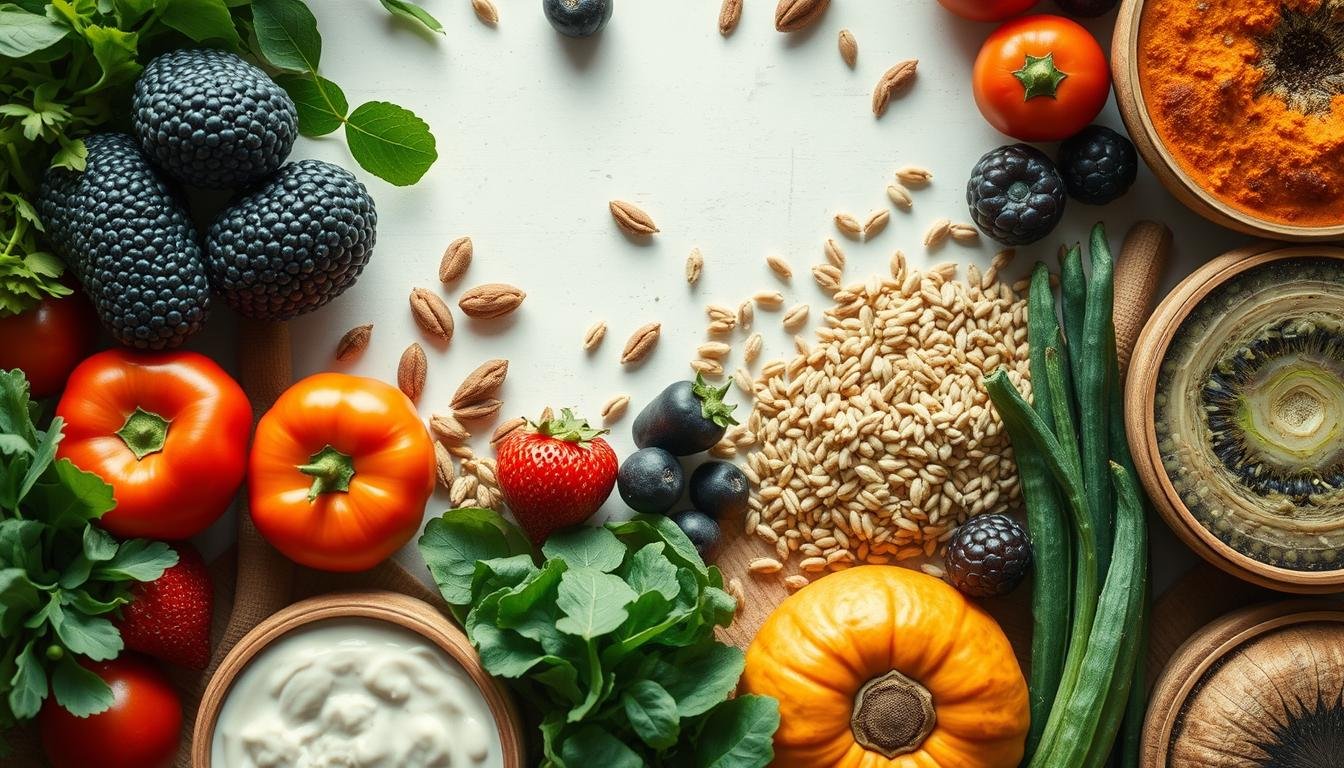
Adding nutrient-dense foods to your diet can greatly improve your health. Superfoods are packed with antioxidants, vitamins, and minerals. They help nourish your body and support a healthy lifestyle.
These powerful foods can increase your energy, boost your immune system, and lower disease risk. In this article, we’ll look at the benefits of healthy eating. We’ll also share tips on adding more superfoods to your meals.
Key Takeaways
- Superfoods are rich in antioxidants and nutrients.
- Incorporating nutrient-dense foods can boost energy levels.
- Healthy eating supports the immune system.
- Superfoods can help reduce the risk of chronic diseases.
- Eating a balanced diet is crucial for overall wellbeing.
What Are Superfoods?
Nutrient-rich foods, known as superfoods, are key in healthy diets. They are packed with nutrients and offer many health benefits.
Definition and Characteristics
Superfoods are nutrient-dense foods full of vitamins, minerals, and antioxidants. They have lots of good stuff that boosts health and well-being. Foods like leafy greens, berries, and fatty fish are great examples.
Superfoods stand out because they’re full of nutrients. They can fight inflammation and help our bodies work better. Eating them can make us healthier.
| Nutrient | Benefit | Superfood Sources |
|---|---|---|
| Antioxidants | Reduce oxidative stress | Berries, Leafy Greens |
| Omega-3 Fatty Acids | Support heart health | Fatty Fish, Nuts, Seeds |
| Fiber | Promote digestive health | Ancient Grains, Fruits |
The Science Behind Superfoods
The science behind superfoods is their rich mix of essential nutrients and bioactive compounds. These help prevent chronic diseases, boost energy, and support mental health.
Research keeps finding new health benefits of superfoods. This makes them a fascinating area of study in nutrition.
The History of Superfoods
The history of superfoods is both diverse and fascinating. It goes back to ancient times. Different cultures have always known about the special nutritional value of certain foods. They used these foods to improve their health and well-being.
Ancient Uses of Nutrient-Dense Foods
Ancient civilizations like the Incas, Aztecs, and Greeks valued nutrient-dense foods. For instance, the Incas ate quinoa for its protein and minerals. The Greeks used chia seeds for their health benefits.
These foods were not just for eating. They were also seen as sacred. They were used for both food and medicine.
Modern Superfood Movement
In recent years, the term “superfood” has become more popular. Many modern diets now include these nutrient-rich foods. The demand for healthier food options has driven this trend.
Today, you can find superfoods like berries, leafy greens, and nuts in most supermarkets. This makes it easier for people to add them to their daily meals.
The renewed interest in superfoods has also led to a better understanding of their health benefits. Studies have shown they can help prevent chronic diseases. So, the modern superfood movement keeps growing, with new trends in health and wellness.
Nutritional Benefits of Superfoods
Superfoods are packed with nutrients that boost our health. They are rich in vitamins, minerals, antioxidants, and fiber. This makes them great for our overall well-being.
Essential Vitamins and Minerals
Superfoods are full of vitamins and minerals we need. Leafy greens like kale and spinach are loaded with vitamins A, C, and K. They also have calcium and iron, which are good for our bones, eyes, and immune system.
Key vitamins and minerals found in superfoods:
- Vitamin A: Important for vision and immune function
- Vitamin C: Essential for collagen production and immune function
- Calcium: Crucial for bone health
- Iron: Vital for healthy red blood cells
Antioxidants and Their Role
Antioxidants protect us from damage caused by free radicals. Berries like blueberries and strawberries are full of antioxidants. These help lower the risk of heart disease and cancer.
“The antioxidant capacity of superfoods can help mitigate oxidative stress, contributing to overall health and well-being.”
Fiber and Digestive Health
Fiber is key in superfoods for our digestive health. Foods like chia seeds and whole grains are high in fiber. This helps with digestion, prevents constipation, and keeps our gut healthy.
| Superfood | Fiber Content (per serving) |
|---|---|
| Chia Seeds | 10 grams |
| Whole Grain Oats | 4 grams |
| Almonds | 3.5 grams |
Eating these superfoods can really boost your nutrition. It helps support your overall health and well-being.
Superfoods to Try
There are many superfoods to try, like leafy greens and ancient grains. Adding these foods to your diet can greatly improve your health.
Leafy Greens
Leafy greens are super nutritious. They are full of vitamins, minerals, and antioxidants. You can add them to many dishes easily.
Kale
Kale is a nutrient powerhouse. It’s full of vitamins A, C, and K, and minerals like calcium and iron. You can put it in salads, smoothies, or sauté it as a side.
Spinach
Spinach is rich in iron and antioxidants. It’s perfect for pasta dishes, salads, or smoothies.
Swiss Chard
Swiss chard is colorful and full of vitamins and minerals. It’s great sautéed with garlic as a side dish.
Berries and Fruits
Berries and fruits are tasty and full of antioxidants, vitamins, and minerals. They’re great as snacks or in meals.
Blueberries
Blueberries are full of antioxidants and are great for brain health. Enjoy them fresh, frozen, or dried.
Acai Berries
Acai berries are rich in antioxidants and good for heart health. They’re often used as supplements or in smoothies.
Goji Berries
Goji berries are antioxidant-rich and support eye health and energy. Enjoy them dried or as juice.
Seeds and Nuts
Seeds and nuts are full of healthy fats, protein, and fiber. They make for a satisfying snack or meal addition.
Chia Seeds
Chia seeds are rich in omega-3s and fiber. They support heart health and digestion. Add them to oatmeal, yogurt, or smoothies.
Flaxseeds
Flaxseeds are a good source of omega-3s and fiber. Grind them for easier digestion and add to baked goods or oatmeal.
Walnuts
Walnuts are brain-healthy, rich in antioxidants and omega-3s. Enjoy them as a snack or add to salads and baked goods.
Ancient Grains
Ancient grains are more nutritious than refined grains. They offer more fiber, vitamins, and minerals.
Quinoa
Quinoa is a complete protein, great for vegetarians and vegans. It’s also rich in iron and magnesium.
Amaranth
Amaranth is a nutrient-dense ancient grain. It’s high in protein and fiber. It’s great as a porridge or in soups.
Teff
Teff is rich in iron and calcium. It’s a nutritious addition to your diet. Use it to make injera or as a porridge.
Adding these superfoods to your diet can bring many health benefits. It also adds variety to your meals.
Superfoods from the Sea
The ocean is full of superfoods, offering a wide range of nutrient-rich foods. These marine superfoods have been eaten for centuries, especially in coastal areas where they are easy to find.
Seaweed Varieties
Seaweed is a top marine superfood, loaded with vitamins, minerals, and antioxidants. It comes in different types, each with its own nutritional benefits.
Nori
Nori is a seaweed used in sushi. It’s full of vitamin B12 and protein, great for vegetarians and vegans.
Kelp
Kelp is a seaweed high in iodine, important for the thyroid. It also has lots of calcium and iron.
Spirulina
Spirulina is a blue-green algae rich in protein and antioxidants. It’s known for fighting inflammation and is often taken as a supplement.
Fatty Fish
Fatty fish are marine superfoods rich in omega-3 fatty acids. These are good for the heart and brain.
Salmon
Salmon is a fatty fish with lots of omega-3s and protein. It also has vitamin D and selenium, making it very nutritious.
Mackerel
Mackerel is another fatty fish with omega-3s. It’s also a good source of vitamin D and B vitamins.
Sardines
Sardines are small, oily fish full of nutrients like calcium, vitamin D, and omega-3s. They’re often eaten canned, making them easy to add to your diet.
Other Marine Superfoods
There are other marine superfoods like sea cucumbers and certain shellfish. They are rich in protein and minerals.
Eating these marine superfoods can help your heart and increase your nutrient intake.
Exotic Superfoods from Around the World
Exploring exotic superfoods can take your diet to new levels. These foods are packed with nutrients and bring a taste of global cultures.
Asian Superfoods
Asian superfoods have been a part of traditional medicine and food for centuries. They are known for their health benefits and versatility in cooking.
Matcha
Matcha, a finely ground green tea powder, is famous for its antioxidants and metabolism boost. It’s great in lattes and smoothies.
Turmeric
Turmeric has curcumin, a compound that fights inflammation. It’s used in curries and as a spice.
Ginseng
Ginseng is valued for its ability to help the body handle stress. It comes in capsules and teas.
South American Treasures
South America is home to many exotic superfoods used by indigenous communities for centuries. These foods are full of nutrients and offer health benefits.
Maca
Maca is a plant from the Andes known for its energy-boosting properties. It’s often taken as a powder.
Cacao
Cacao is raw chocolate, full of antioxidants and flavonoids. It’s used in dark chocolate and supplements.
Lucuma
Lucuma is a fruit from the Andes that makes a sweet syrup. It’s also packed with vitamins and minerals.
African Superfoods
Africa is rich in exotic superfoods used for generations. These foods are nutritious and offer unique flavors.
Baobab
Baobab fruit is high in vitamin C and fiber. It’s popular in smoothies and health foods.
Moringa
Moringa is called the “miracle tree” for its health benefits. It’s full of antioxidants and has anti-inflammatory properties.
Trying these exotic superfoods can add variety to your diet and offer health benefits. Whether you want to boost energy or try new tastes, there’s a superfood for everyone.
How to Select and Store Superfoods
To get the most out of superfoods, it’s important to know how to choose and store them right. Picking the right superfoods means more than just grabbing any option. You need to think carefully to get the best nutritional benefits.
Fresh Produce Selection Tips
When picking fresh superfoods like leafy greens or berries, look for bright colors. Avoid any signs of wilting or mold. Choose organic produce when you can to avoid pesticides. For fruits, a ripe but firm texture is best.
Proper Storage Methods
Storing superfoods right is key to keeping them fresh and nutritious. Store leafy greens in a cool, dry spot. Keep berries in the fridge in a container that breathes. Nuts and seeds need to be stored in airtight containers to stay fresh.
Shelf Life and Preservation
Knowing how long superfoods last is important for meal planning and avoiding waste. Most superfoods have a short shelf life, from a few days for greens to months for nuts and seeds. Freezing is a great way to preserve many superfoods, keeping nutrients in.
By following these tips, you can enjoy your superfoods at their peak nutritional and flavor value.
Incorporating Superfoods Into Your Daily Diet
Learn how to add superfoods to your daily meals for better nutrition. With a bit of creativity, you can make your meals and snacks healthier with these foods.
Breakfast Ideas
Starting your day with superfoods can give you more energy. Add chia seeds to your oatmeal or yogurt for omega-3s and fiber. Blend spinach into your smoothie for a nutritious breakfast.
Lunch and Dinner Recipes
Adding superfoods to your meals is easy. Make a quinoa salad with kale and pomegranate seeds for a healthy meal. Grilled salmon with steamed broccoli is also a great choice.
Here’s a sample meal plan:
| Meal | Superfood | Benefit |
|---|---|---|
| Breakfast Smoothie | Spinach | Rich in Iron |
| Lunch Salad | Kale | High in Vitamins |
| Dinner | Salmon | Omega-3 Rich |
Snacks and Smoothies
Healthy snacks include goji berries or almonds, both full of antioxidants. Make a smoothie with blueberries and chia seeds for extra nutrition.
As Dr. Mark Hyman once said,
“Food is not just something we eat, it’s a medicine that can heal our bodies.”
Adding superfoods to your diet is a step towards a healthier life.
Conclusion
Adding superfoods to your diet can greatly improve your health and wellness. These foods are packed with vitamins, minerals, antioxidants, and fiber. They offer many benefits.
Choosing the right superfoods for your meals is key to healthy eating. They can boost your energy, help with digestion, and make you feel more alive. Superfoods are a great way to enhance your diet.
When exploring superfoods, aim for variety and balance. There are many options like leafy greens, berries, ancient grains, and fatty fish. This way, you can enjoy a diet that’s both healthy and tasty. Embracing superfoods is a big step towards a better, more balanced life.
FAQ
What are superfoods, and how do they benefit my health?
Superfoods are foods packed with nutrients. They help keep you healthy when eaten as part of a balanced diet. They’re full of vitamins, minerals, and antioxidants that fight diseases and boost well-being.
Are superfoods scientifically proven to have health benefits?
Yes, many superfoods have been studied. Their benefits are well-documented. For instance, berries’ antioxidants reduce inflammation, and fatty fish’s omega-3s are good for the heart.
How can I incorporate superfoods into my daily diet?
Adding superfoods to your diet is easy. Start by adding spinach to omelets, snacking on nuts and seeds, or blending berries into smoothies. Try new recipes with superfoods as main ingredients.
Are there any superfoods that are particularly beneficial for digestive health?
Yes, chia seeds, flaxseeds, and fermented foods are great for digestion. They’re full of fiber and probiotics that support a healthy gut.
Can I get enough nutrients from superfoods alone?
Superfoods are nutrient-dense, but a balanced diet is key. Eating only one food can lead to imbalances. Mix different superfoods and whole foods for a balanced diet.
How do I store superfoods to maintain their nutritional value?
Keep superfoods cool, dry, and away from sunlight and moisture. Nuts and seeds spoil if exposed to heat or humidity. Leafy greens should be refrigerated to stay fresh.
Are there any potential allergic reactions or interactions with medications I should be aware of when consuming superfoods?
Yes, superfoods can cause allergic reactions or interact with medications. Some people are allergic to nuts or seeds. Others may react with blood thinners or other meds. Always talk to a doctor if you’re concerned.
Can superfoods be used as a replacement for conventional medical treatment?
No, superfoods are not a substitute for medical care. They’re great for a healthy lifestyle but not for treating diseases. Always see a doctor for proper treatment.