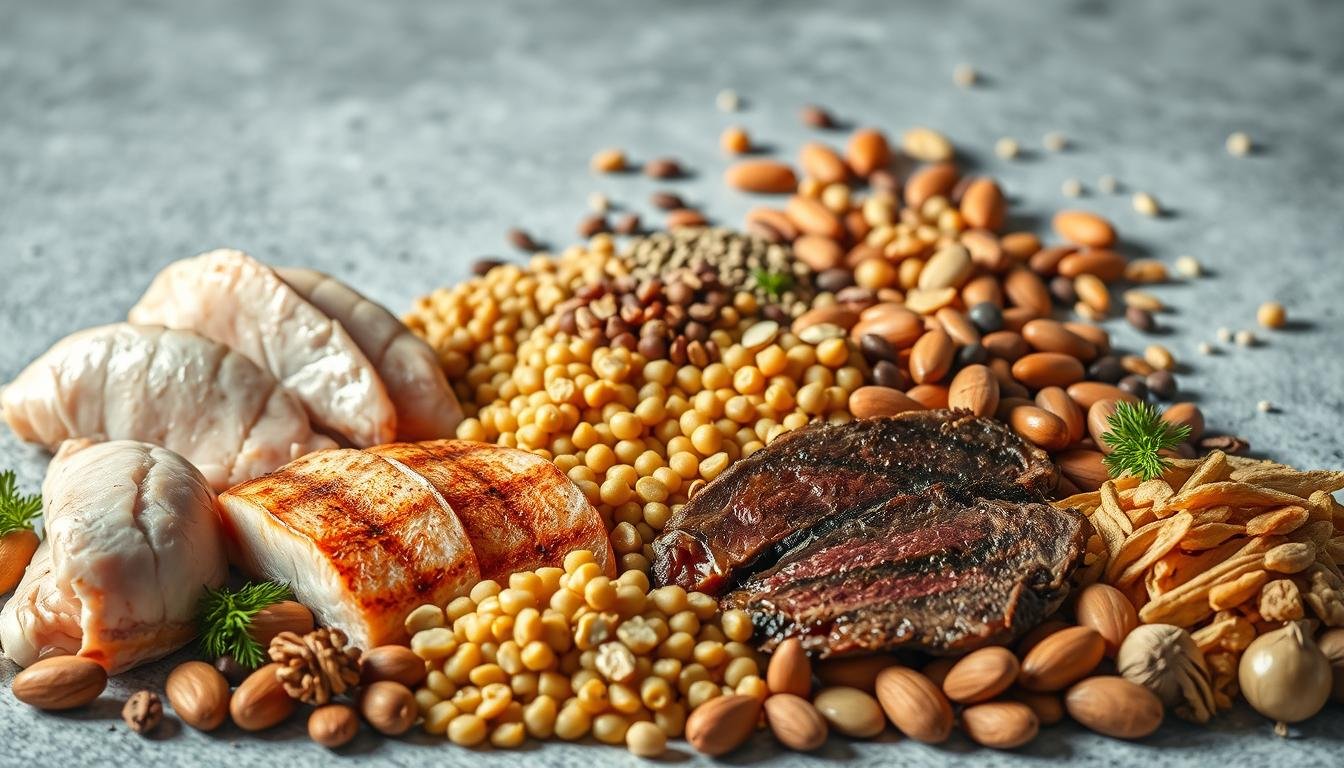
Eating a diet full of high protein foods is key for staying healthy. Protein helps build and fix muscles, organs, and tissues in our bodies.
A protein food list has many tasty and healthy options. Knowing how important nutrition is and adding these foods to your meals can really boost your health.
This guide will show you the top high protein foods to add to your meals. This way, you’ll get the nutrition you need.
Key Takeaways
- Adding high protein foods to your diet helps grow and repair muscles.
- A diet full of protein can make you healthier overall.
- Knowing your nutritional needs helps you make better food choices.
- You can include many protein-rich foods in a healthy diet.
- Good nutrition is vital for keeping muscles, organs, and tissues healthy.
The Power of Protein: Why Your Body Needs It
Adequate protein intake is key for good health. It helps with muscle repair and keeps the immune system strong. Protein is a vital nutrient for many bodily functions.
Essential Functions of Protein in the Body
Protein does many important jobs in our bodies. It’s crucial for muscle building and repair. It also helps make enzymes and hormones that control our body’s processes.
Muscle Building and Repair
Protein is needed for building and fixing muscle. This is especially important for athletes and those who are active.
Enzyme and Hormone Production
Proteins help make enzymes and hormones. These are important for metabolism and growth.
Health Benefits of Adequate Protein Intake
Getting enough protein has many health benefits. It helps with weight management and immune system support. It can help keep a healthy weight and boost immune function.
Weight Management and Satiety
Protein-rich foods can make you feel full. They can also help with weight loss.
Immune System Support
Protein is vital for a strong immune system. It helps fight off illnesses and infections.
Understanding Protein Quality and Bioavailability
It’s key to know about protein quality and bioavailability for the best nutrition. Protein quality is how well our bodies use the protein we eat. Bioavailability is how well our bodies absorb and use that protein.
Complete vs. Incomplete Proteins
Proteins are either complete or incomplete based on their amino acids. Complete proteins have all nine essential amino acids, found in animal products like meat and dairy. Incomplete proteins from plants lack some amino acids. But, eating different plant proteins can give us all the amino acids we need.
Factors Affecting Protein Absorption
Many things affect how well we absorb protein. These include the protein’s source, our digestive health, and other nutrients. Protein digestibility scores show how well our bodies can digest a protein.
Protein Digestibility Scores
These scores range from 0 to 1, with higher scores meaning better absorption. Eggs have a top score of 1.0. Some plant proteins have lower scores.
Food Combinations That Enhance Protein Utilization
Some foods work better together for protein. For example, eating legumes with grains or nuts with seeds can give us all the amino acids we need. This makes our protein intake better.
Comprehensive Protein Food List for Optimal Nutrition
Knowing the different protein sources is crucial for good nutrition. Protein helps build and fix tissues in our bodies, like muscles and bones. Eating enough high-quality protein is key for staying healthy.
High-Quality Animal Protein Sources
Animal proteins are top-notch because they have all the amino acids we need. Foods like lean meats, fish, eggs, and dairy are great examples. Lean meats like chicken and turkey are not only high in protein but also low in bad fats, which is good for weight management.
Protein Content Comparison Chart
It’s helpful to compare the protein in different animal foods. For example, chicken breast has about 26 grams of protein per 3-ounce serving. Lean beef has around 22 grams. Knowing these numbers helps plan a balanced diet.
| Protein Source | Protein Content (per 3 oz serving) |
|---|---|
| Chicken Breast | 26 grams |
| Lean Beef | 22 grams |
| Salmon | 20 grams |
Budget-Friendly Animal Protein Options
Some animal proteins can be pricey, but there are affordable choices. Canned tuna, eggs, and certain beef cuts are both cheap and protein-rich. These options make it easier to eat a high-protein diet.
Plant-Based Protein Powerhouses
For those eating plants, there are many protein-rich foods. Legumes, nuts, seeds, and whole grains are all good sources. Mixing these foods gives you all the amino acids you need for health.
Combining Plant Proteins for Complete Nutrition
Plant proteins are often missing one or more amino acids. But, mixing different plants, like grains with legumes, can give you all you need. This is important for staying healthy.
Protein-Rich Meat Alternatives
Plant-based meat alternatives, like tofu and tempeh, are getting popular. They taste and feel like meat but are full of protein. They’re great for those who want to eat less meat.
Animal-Based Protein Options
A good diet has many animal-based protein sources. Each one has special benefits. They give us essential amino acids and other important nutrients for health and fitness.
Lean Meats and Poultry
Lean meats and poultry are top protein choices. Chicken breast, turkey, and lean beef are high in protein but low in bad fats. Eating them helps keep muscles strong and aids in weight control.
- Chicken breast: High in protein, low in fat
- Turkey: Rich in protein, a good source of B vitamins
- Lean beef: Provides iron and protein
Fish and Seafood
Fish and seafood are not just good for protein. They also have omega-3 fatty acids, which are good for the heart and brain. Salmon, mackerel, and sardines are especially good for you.
Key benefits:
- Rich in omega-3 fatty acids
- High-quality protein
- Variety of vitamins and minerals
Dairy and Eggs
Dairy and eggs are great animal-based protein sources. They are full of nutrients like calcium, vitamin D, and protein.
Greek Yogurt and Cottage Cheese Benefits
Greek yogurt and cottage cheese are packed with protein. They also have probiotics, which help with digestion.
Egg Whites vs. Whole Eggs
Egg whites are all protein, but whole eggs have more nutrients. The yolk has vitamins and minerals. Both are good for a balanced diet.
Plant-Based Protein Sources
Plant-based protein sources offer a variety of healthy options for a balanced diet. They are good for your health and help the planet too.
Legumes and Beans
Legumes and beans are very protein-rich. They are also affordable and full of nutrients. You can find them in foods like lentils, chickpeas, black beans, and kidney beans.
Preparation Methods to Increase Digestibility
Soaking and cooking legumes can make them easier to digest. Boiling or pressure cooking helps your body use these proteins better.
Versatile Cooking Applications
Legumes fit into many dishes, from soups to salads. Their flexibility makes them a favorite in many cuisines.
Nuts and Seeds
Nuts and seeds are not just protein-rich. They also have healthy fats and fiber. Try almonds, chia seeds, hemp seeds, and pumpkin seeds. Enjoy them as snacks or add them to meals.
Whole Grains and Vegetables with Protein
Whole grains and some vegetables have protein too. Quinoa is a complete protein, great for plant-based diets. Broccoli, spinach, and kale also have protein.
| Food | Protein Content per Serving | Serving Size |
|---|---|---|
| Lentils | 18g | 1 cup cooked |
| Chickpeas | 15g | 1 cup cooked |
| Almonds | 6g | 1 ounce (about 23 nuts) |
| Quinoa | 8g | 1 cup cooked |
Determining Your Protein Requirements
Your protein needs are unique and depend on several factors. These include your age, weight, and how active you are. Knowing these needs is key to staying healthy and fit.
Protein Needs Based on Age, Weight, and Activity Level
Protein needs change with age, weight, and activity level. Older adults might need more to keep their muscles strong. Athletes need more to help their muscles repair and grow.
Daily Protein Calculator Guide
A daily protein calculator can figure out your specific needs. It looks at your age, weight, and activity level. This way, you get a personalized protein plan.
Signs of Inadequate Protein Intake
Signs you might not have enough protein include:
- Muscle weakness
- Fatigue
- Hair loss
- Poor wound healing
Special Considerations for Athletes and Active Individuals
Athletes and those who are active need more protein. They need it to help their muscles recover and grow after exercise.
Timing Protein Around Workouts
Eating protein around your workouts can help your muscles recover and grow. This is called the “anabolic window.”
Protein Supplementation: When Is It Necessary?
While whole foods can provide enough protein, supplements can help too. Athletes and those with high protein needs might find supplements useful.
Incorporating Protein Throughout Your Day
To get the most from protein, spread it out in your meals. This helps keep muscles strong, aids in weight control, and keeps you full longer.
Protein-Rich Breakfast Ideas
Begin your day with a protein-packed breakfast. This can include scrambled eggs with spinach, Greek yogurt with nuts, or a banana and almond milk smoothie.
Lunch and Dinner Protein Options
At lunch and dinner, choose lean meats like chicken or turkey. Fish with omega-3s and plant-based foods like lentils and chickpeas are also good. They give you the amino acids you need for health.
Smart Protein Snacking
Snacking on protein can stop hunger and help muscles recover. Try protein bars, nuts, or hard-boiled eggs for quick energy.
On-the-Go Protein Solutions
For those always on the move, protein shakes or energy balls are great. They’re easy to take with you and full of protein.
Balancing Protein with Other Nutrients
It’s important to mix protein with healthy fats and carbs. This mix keeps your body fueled and your energy up.
| Meal | Protein Source | Additional Nutrients |
|---|---|---|
| Breakfast | Eggs, Greek Yogurt | Whole grain toast, fruits |
| Lunch | Chicken, Lentils | Vegetables, quinoa |
| Dinner | Fish, Tofu | Brown rice, steamed vegetables |
| Snacks | Nuts, Protein bars | Fruits, carrot sticks |
Conclusion: Building a Balanced Protein-Rich Diet
A diet rich in protein can greatly improve your health. Adding high-quality protein to your meals helps grow muscles, keeps weight in check, and lowers disease risk.
To create a balanced diet, mix animal and plant proteins. Eat lean meats, fish, eggs, dairy, legumes, nuts, and seeds. This ensures you get all the amino acids your body needs.
A protein-rich diet is more than just protein. It’s about balance with other nutrients too. Pair proteins with whole grains, veggies, and healthy fats for meals that nourish your body.
With this guide’s tips, you can make better diet choices. Create a meal plan that fits your nutritional needs and health goals.
FAQ
What are the best sources of protein?
Good protein sources include lean meats like chicken and turkey. Fish and seafood, eggs, and dairy products are also great. Legumes, beans, nuts, and seeds offer plant-based options. Both animal and plant-based foods can provide high-quality protein.
How much protein do I need daily?
Protein needs vary by age, weight, and activity level. Sedentary adults need 0.8 grams of protein per kilogram of body weight daily. Athletes or the active might need more.
Can I get enough protein from plant-based sources?
Yes, you can get enough protein from plants. Legumes, beans, lentils, nuts, and seeds are all high in protein. Mixing different plant proteins, like whole grains with legumes, can give you all essential amino acids.
What is the difference between complete and incomplete proteins?
Complete proteins have all nine essential amino acids the body can’t make. Animal products like meat, fish, and eggs are complete proteins. Incomplete proteins, found in many plants, lack some amino acids but can be combined to provide complete protein.
How can I increase my protein intake without consuming more calories?
Choose high-protein, low-calorie foods like lean meats, fish, eggs, and plant-based options like legumes and beans. Greek yogurt, cottage cheese, and nuts are also good for protein-rich snacks.
Are protein supplements necessary?
Protein supplements aren’t needed for most people. Whole foods can usually meet protein needs. But, athletes or those needing a lot of protein might find supplements helpful, especially before or after workouts.
How does protein help with weight management?
Protein helps with weight management by making you feel full, reducing hunger, and supporting muscle during weight loss. High-protein diets can lead to more weight loss and better body shape.
Can protein help support immune function?
Yes, protein is key for immune function. It helps make antibodies and immune cells that fight infections. Getting enough protein is vital for a healthy immune system.
What are some convenient on-the-go protein options?
Convenient protein options include hard-boiled eggs, Greek yogurt, cottage cheese, nuts, seeds, protein bars, and jerky. These are easy to take on the go to help meet daily protein needs.